
Key Witnesses in the AARO Narrative
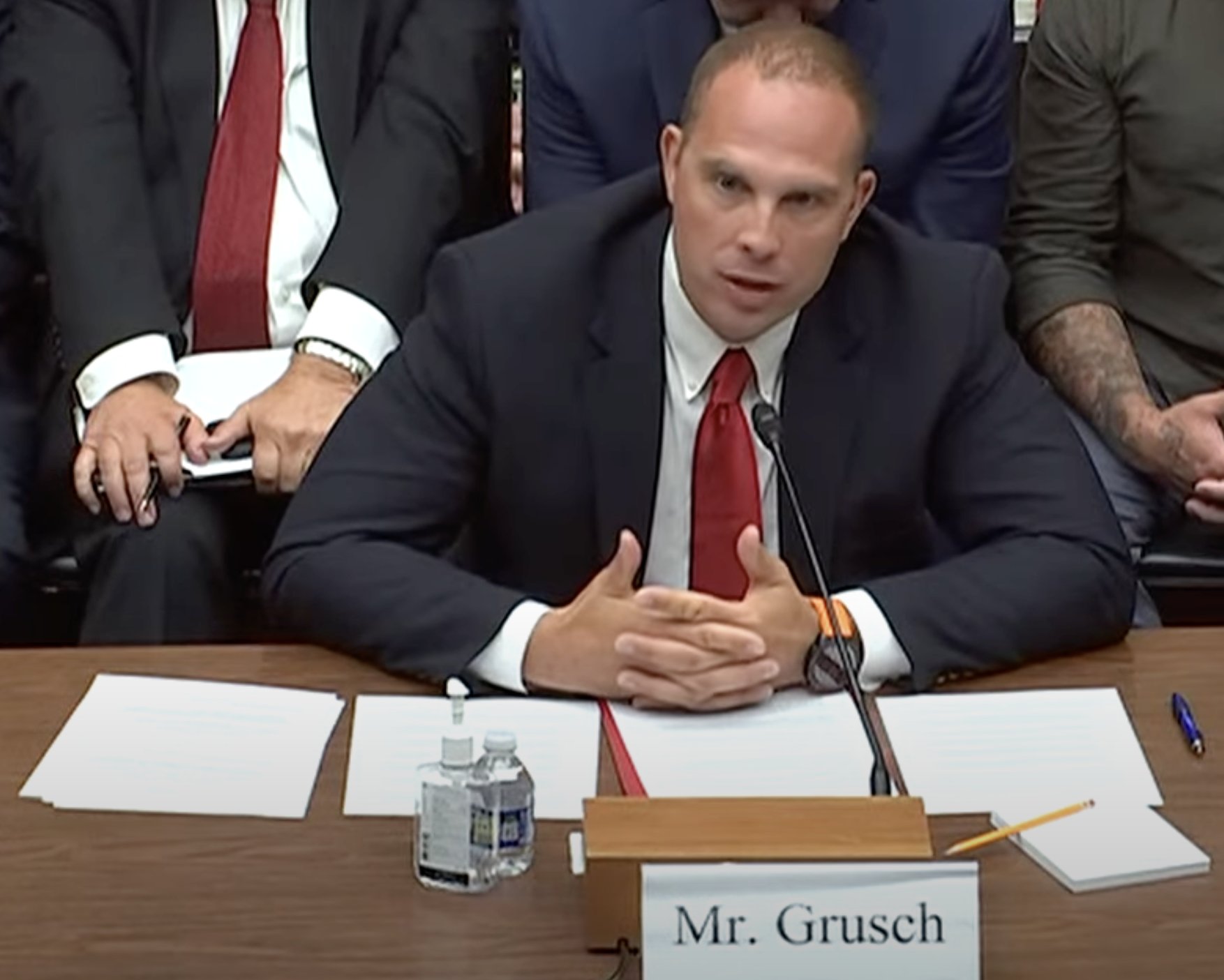

Public‑domain images of key figures in the AARO disclosure debate.
The Machine Behind the Mystery — What AARO Is Actually Doing
Top Stories
AARO Held a Closed-Door Workshop in August 2025 — The Report Just Surfaced
On August 5–6, 2025, AARO convened a two-day invite-only workshop at Associated Universities Inc. (AUI) headquarters in Vienna, Virginia, organized as a three-way collaboration with AUI and Florida State University. Co-led by Dr. Tim Spuck (AUI) and Dr. Gretchen Stahlman (FSU), the session drew roughly 40 participants from government, academia, and independent research organizations — including the National UFO Reporting Center. The focus: how to collect, store, and analyze narrative UAP data from military logs, civilian reports, archival collections, and social media. The white paper appeared on AARO's site in early 2026 and was first widely reported by DefenseScoop in March.
Why it matters: AARO is building its methodology in low-profile working sessions before going public with conclusions. Good science develops frameworks before announcing findings. But invite-only sessions on a topic this contested raise legitimate questions: who sets the standards, who reviews the work, and what gets filtered out before the public sees the output? Whether this workshop represents rigorous preparation or managed opacity depends entirely on how much you trust the institution running it.
AI Is Now Part of the UAP Toolbox
The August workshop included sessions on using AI and machine learning for UAP pattern recognition — recurring characteristics, timing correlations, geographic clusters across thousands of reports. Researchers also discussed filtering for hoaxes and reporting biases.
Why it matters: Good science looks for patterns across large datasets before jumping to conclusions. If AARO can identify recurring shapes, timing, locations, or sensor signatures across thousands of reports, it can separate signal from noise and test whether certain cases cluster in ways that deserve deeper investigation. Imagine an algorithm quietly flagging that 40 unrelated incidents — spanning Navy radar logs, FAA reports, and civilian sightings — all occurred within the same 200-mile corridor, at the same altitude, during the same seasonal window. No single analyst would ever connect those dots. An AI might do it overnight.
AARO Still Has No Evidence of Extraterrestrial Technology
According to the FY2024 Consolidated Annual Report released November 14, 2024, AARO has 1,652 UAP cases in its holdings, with 757 new reports filed in that fiscal year. Of those, AARO has flagged 21 as genuinely anomalous — under 3.5% of the total — and is still working them with intelligence-community and science partners. Its official position: no verifiable evidence of extraterrestrial origin. But "no verifiable evidence" and "no evidence" are very different statements.
Take PR-017, an officially released AARO case: a 2024 report from U.S. European Command consisting of 30 seconds of video captured on a commercially available cell phone. AARO's published conclusion? "The video footage associated with this report is insufficient for AARO to render a determination on its subject matter." Something was observed. Something was recorded. The agency responsible for answering the question simply can't — because the data isn't strong enough to prove what it was. And crucially, not strong enough to disprove it either.
Why it matters: AARO's unresolved cases aren't failures — they're the most honest thing the office produces. Something was observed. Something was recorded. And we still don't know what it was. That's the frontier.
The National Archives Is Now Collecting UAP Records
The National Archives doesn't collect trivia. It holds the Declaration of Independence, the Nixon tapes, and decades of classified documents that shaped the 20th century. UAP records are now going there too.
Per law, agencies are required to submit UAP-related materials to the Archives — the same institution that spent decades slowly declassifying the JFK assassination files. That process took over 60 years and is still ongoing. Future generations will file FOIA requests on this era the same way we file them on Roswell.
Why it matters: UAP isn't fringe anymore — it's part of the American story, and the National Archives is where the American story gets kept.
Deep Dive: AARO's Limitations and Why They Matter
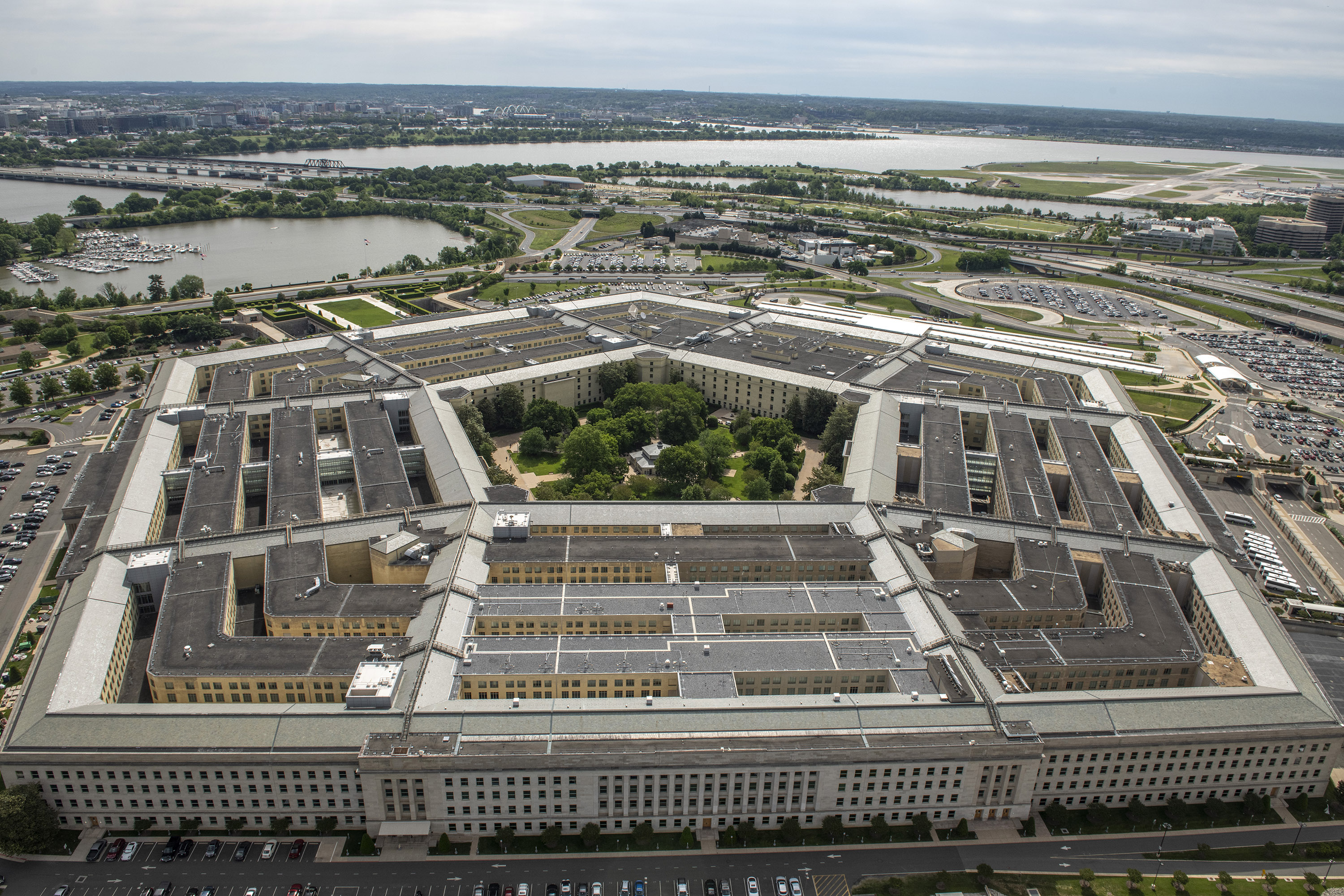
Aerial view of the Pentagon, May 2021. Public‑domain image via Wikimedia Commons.
The Access Problem
We know AARO is limited because officials have said so under oath. In 2023, former intelligence officer David Grusch testified to Congress that UAP retrieval programs exist and operate entirely outside AARO's oversight — shielded inside Special Access Programs the office has never been granted entry to. In 2024, a federal whistleblower with direct exposure to legacy crash retrieval programs met with AARO but deliberately withheld sources and methods, citing distrust in how the office handles sensitive disclosures. Retired Navy Rear Admiral Tim Gallaudet testified the same year that DoD's lack of transparency is itself the story.
Former AARO Director Dr. Sean Kirkpatrick has pushed back, insisting the office has unique congressional authority to access all UAP information — historic or current. His successor, Dr. Jon Kosloski — who came to AARO in August 2024 after more than 20 years at the NSA in optics, computing, and crypto-mathematics — has been more measured, telling reporters at his November 2024 press briefing that some cases in the office's queue remain unexplained even to him. "There are interesting cases that I, with my physics and engineering background and time in the IC, I do not understand. And I don't know anybody else who understands them either," Kosloski said. But that authority and scientific rigor only matters if the programs the office is trying to access are disclosed to it in the first place. A loophole in the National Security Act of 1947 allows certain classified programs to avoid White House and full congressional notification entirely — meaning they may never appear on AARO's radar at all.
The office can only investigate what it's allowed to see — and its conclusions can only ever be as complete as its access.
The Methodology Challenge
The August 2025 workshop is the clearest window into how AARO actually thinks about analysis, and it reveals an office still wrestling with fundamental questions about its own process.
The agenda deliberately avoided the question everyone outside the room was asking — what are UAPs? — and focused on something more foundational: how do you build a system rigorous enough to find out?
What they settled on was a dual-methodology framework. On one track: corpus-level analysis: feeding thousands of reports into pattern-recognition systems looking for time and space clustering, keyword trends, and statistical correlations. On the other: narrative analysis — preserving the qualitative detail of individual reports, because a witness account contains context, emotion, and experiential data that a sensor log never captures.
The workshop also produced specific recommendations that reveal how far from finished this work is: standardized metadata templates still need to be built, datasets need to be made interoperable across agencies, and AI deployment requires human oversight at every stage, because the risk of pattern-finding hallucinations in sensitive national security data is real.
When AARO says "no evidence of extraterrestrial technology," it's partly describing its findings, and partly describing the limits of a methodology that, by its own admission, is still under construction.
The Politics Layer
AARO didn't appear out of nowhere. Congress created it because it had no choice.
Years of whistleblower testimony, leaked footage, pilot accounts, and a public that refused to let the topic die forced the government's hand. The 2017 New York Times bombshell on the Pentagon's secret UAP program, the 2021 DNI report, David Grusch going on record — all of it turned up the pressure until Congress had to respond with something tangible. And AARO was that something.
AARO is, at its core, a political response to public demand for the truth. Which means its findings, its communication, and its budget are never purely scientific, existing inside a system that is acutely aware of what the public is watching for.
The office can produce the best science in the world, but if the results are filtered through layers of classification, DoD messaging, and congressional politics before they reach us, what we get may be shaped as much by optics as by evidence.
The question worth asking isn't just what AARO finds. It's what it's allowed to tell us — and who decides that.
Quick Hits
- AARO's public reporting portal is active for military and government personnel; civilian expansion is planned.
- The Schumer-Rounds UAP Disclosure Act was gutted in conference in December 2023 — stripping the independent Review Board and federal eminent domain provisions — then refiled in 2025 with the full original language restored. The full three-year arc is covered in Edition 003.
- The Pentagon's UAP definition now covers aerial, underwater, and trans-medium phenomena — anything anomalous in any domain.
- AARO's "Gremlin" sensor capability is currently deployed at an undisclosed national security site for a 90-day pattern-of-life baseline collection — a quiet step toward instrumentation-led rather than report-led UAP detection.
Get the next briefing first
Briefings go to subscribers before they're posted here. One email per edition, no filler, and your 10% store code arrives with the welcome email.
Subscribe Free →