The Vanishing: A Documented Pattern of UFO-Linked Researchers
Over the past two years, at least ten scientists, engineers, and cleared personnel linked to UFO/UAP programs, aerospace research, or the nuclear complex have vanished or died under unexplained circumstances. This is not a conspiracy theory; it is a documented pattern that has drawn FBI searches, White House notice, and a Department of Energy review. Here's what we know, what connections hold up, and what they tell us about the stakes of disclosure.
⚠️ Critical context
This article does not claim a conspiracy. It documents a factual pattern of cases, acknowledges where official reviews find no connections, and explores why the pattern continues to raise eyebrows within government circles. The White House has ordered a review. That alone makes the story worthy of serious attention.
Executive Summary
From early 2025 to February 2026, a cluster of disappearances and deaths among scientists, engineers, and cleared personnel has drawn FBI searches, media attention, and White House review. The cases involve aerospace research, nuclear programs, and UAP-related projects. The most prominent are retired Air Force Major General William "Neil" McCasland and NASA JPL Director of Materials Processing Monica Jacinto Reza. Both vanished under unusual circumstances with a funding link: McCasland oversaw programs that supported Reza's work.
Other cases include Steven Garcia, a cleared contractor at the Kansas City National Security Campus; Melissa Casias and Anthony Chavez, both former Los Alamos staff; and the killings of MIT plasma-fusion director Nuno Loureiro and Caltech astrophysicist Carl Grillmair. Two NASA JPL scientists died without public cause of death, and a Novartis biologist's body was found months after he disappeared.
Officially, the FBI and Department of Energy have found no evidence linking the cases to UAP secrecy or foul play. CBS News, after a six-month investigation, concluded there is no proof of a coordinated plot. Yet the pattern has been described by DOE officials as "eyebrow raising," and the White House has directed a formal interagency review.
This report examines each case, the institutional and geographic threads that connect some of them, the known facts about each disappearance or death, and the implications for the broader disclosure landscape. The goal is not to assert a conspiracy but to present the data, acknowledge the gaps, and explain why a pattern of missing and dead researchers matters-even when direct causality remains unproven.
1. The Pattern: Ten Cases, Two Years, One Unsettling Trend
The pattern emerges when the cases are laid side by side. They span three categories: missing persons (five cases), violent deaths (two shootings), and unexplained deaths (three cases). All ten individuals worked in fields adjacent to UAP research, advanced aerospace, or nuclear-weapons science. Seven were based in New Mexico or California, two in Massachusetts, and one in Missouri. Five had top-security clearances. Four were directly employed by or contracted to the U.S. nuclear complex. Three were senior NASA JPL researchers.
The pattern stands out not just by numbers, but by concentration of fields, tight time window (most within 18 months), and frequent "vanishing" without trace. Five disappearances involved abandoned belongings, reset phones, and in two cases handguns-suggesting premeditated departure, not abduction or accident.
The FBI is actively searching for McCasland, Garcia, and Reza. The DOE's internal review, initiated after Garcia's disappearance, initially found no evidence of a connection but later acknowledged the cluster was "concerning enough to merit a second look." That second look is now underway at White House direction.
Missing (5)
- Maj Gen William "Neil" McCasland (Feb 2026)
- Monica Jacinto Reza (Jun 2025)
- Steven Garcia (Aug 2025)
- Melissa Casias (Jun 2025)
- Anthony Chavez (May 2025)
Killed (2)
- Nuno Loureiro (Dec 2025)
- Carl Grillmair (Feb 2026)
Unexplained Deaths (3)
- Michael David Hicks (Jul 2023)
- Frank Maiwald (Jul 2024)
- Jason Thomas (found Mar 2026)
Common Threads
NASA JPL, Wright-Patterson AFB, Los Alamos, top-secret clearances, New Mexico cluster, UAP-adjacent research.
2. The McCasland-Reza Connection: A Funding Link That Can't Be Ignored
The strongest institutional link connects Neil McCasland and Monica Jacinto Reza. As Air Force Research Laboratory commander (2011-2013), McCasland oversaw a $2.2 billion budget that included materials-science programs funding Reza's NASA JPL work on Mondaloy, a nickel superalloy for next-generation rockets.
Reza disappeared on June 22, 2025, while hiking in the Angeles National Forest. She was 30 feet behind her companion when she vanished; no trace has been found. Her research was not classified, but its strategic value to hypersonics and reusable launch systems made her a person of interest to multiple agencies.
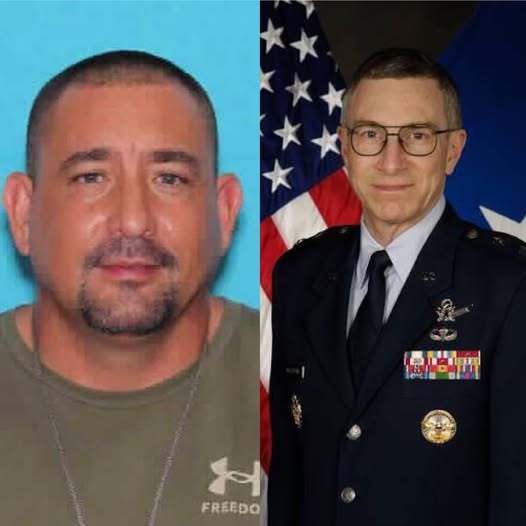
McCasland vanished eight months later on February 27, 2026. He left home with hiking boots and a .38 revolver, no phone. His wife told authorities he'd "planned not to be found." McCasland was named in 2016 WikiLeaks emails as an unofficial advisor to Tom DeLonge's UFO-disclosure effort; his wife later called it "brief and informal."
This connection isn't conspiracy evidence, but a factual overlap: an Air Force research administrator and a NASA scientist whose work he funded both vanish without trace within eight months. That alone justifies FBI treatment as potentially related.
3. The New Mexico Cluster: Los Alamos, Clearances, and Reset Phones
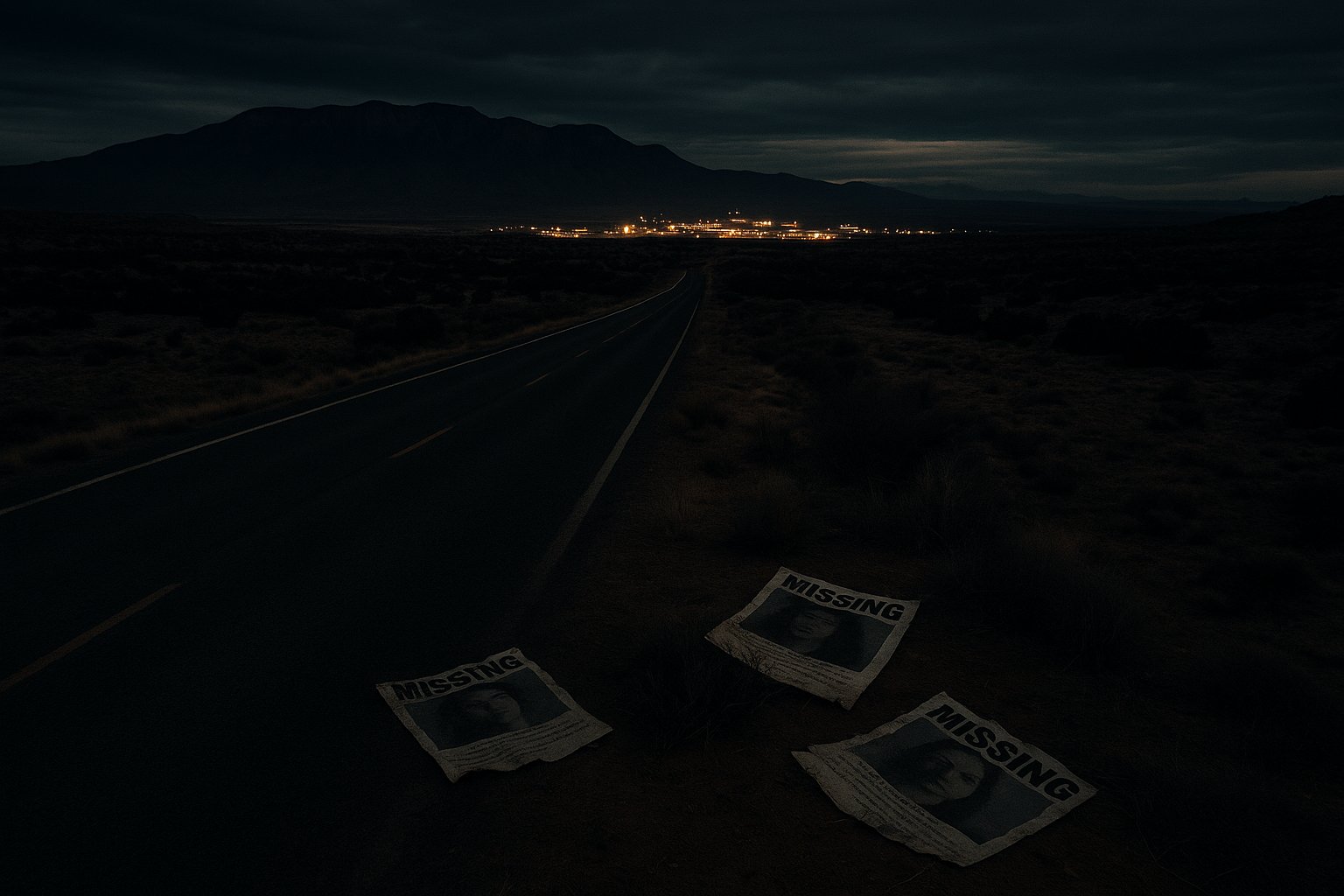
Four cases cluster in New Mexico, home to Los Alamos, Sandia Labs, and Kirtland AFB, the heart of the U.S. nuclear complex. Steven Garcia, Melissa Casias, Anthony Chavez, and Neil McCasland all lived near Albuquerque or Los Alamos.
Steven Garcia, a contractor with top-secret clearance at the Kansas City National Security Campus, disappeared August 28, 2025. He left his Albuquerque home on foot with only a handgun, no phone, like McCasland.
Melissa Casias, an administrative assistant with security clearance at Los Alamos, vanished on June 26, 2025. Her phones were found factory-reset. Her niece told CBS News there was no evidence linking her disappearance to the other cases, but the same time and place raises questions even without proof of a link.
Anthony Chavez, a former Los Alamos staffer, went missing in May 2025. Few details have been released, but his background places him in the same institutional ecosystem.
The New Mexico cluster is the most geographically concentrated part of the pattern. All four individuals had security clearances; three worked directly on nuclear-weapons programs. The factory-reset phones in Casias's case suggest a deliberate attempt to erase digital footprints-a detail that echoes in other missing-person investigations involving sensitive government work.
4. Scientists Killed: MIT and Caltech Shootings
Two high-profile academic researchers were shot and killed in separate incidents within three months of each other. Both deaths were attributed to personal disputes, but their fields-plasma fusion and astrophysics-are central to advanced propulsion and UAP-related science.
Nuno Loureiro, director of MIT's Plasma Science and Fusion Center, was killed on December 15-16, 2025. The shooter was a former classmate who also shot two Brown University students. He was later found dead by suicide in a Salem, New Hampshire storage unit on December 18, 2025. Loureiro's work on magnetically confined fusion has obvious relevance to aerospace propulsion; his center receives substantial Department of Defense funding.
Carl Grillmair, a Caltech astrophysicist and recipient of NASA's Exceptional Scientific Achievement Medal, was shot and killed on February 16, 2026. The suspect, arrested the same day, had a prior trespassing dispute with Grillmair. Grillmair's research focused on exoplanet detection and space-based telescopes-fields that overlap with the search for technosignatures.
Law enforcement says both shootings were unrelated to the victims' research. Yet the timing, amid disappearances and White House disclosure push, complicates the story. When UAP-adjacent scientists die violently, even for unrelated reasons, it makes other researchers more wary of speaking up. This wariness, justified or not, changes how disclosure happens.
5. Unexplained Deaths: NASA JPL and the Biologist
Three deaths lack clear public explanations, though none are currently treated as suspicious by authorities.
Michael David Hicks, a NASA JPL engineer who worked on the DART (Double Asteroid Redirection Test) mission, died in July 2023 at age 59. No cause of death has been released. Hicks had no known connection to UAP research, but his position at JPL-the same institution as Monica Reza-places him in the same physical and institutional environment.
Frank Maiwald, a principal researcher at NASA JPL, died on July 4, 2024, at age 61. No autopsy was performed, and the death was attributed to natural causes. Maiwald's work involved deep-space communications, a field with potential relevance to UAP detection.
Jason Thomas, a Novartis biologist, disappeared in December 2025; his body was found in a lake in March 2026. Thomas had no direct tie to aerospace or nuclear work, but his case is sometimes included in lists of "scientist disappearances" because of his field and the timing. Family say he was distraught after his parents' deaths, suggesting suicide.
These three cases represent the low-evidence portion of the documented cluster. Without proof of foul play or a substantive research overlap, they remain officially unconnected to the other cases. Yet their recurring inclusion in media coverage demonstrates how easily proximity can generate narrative cohesion, even when direct causality is absent.
6. Officials Say: "No Evidence" - But Also "Eyebrow Raising"
The official stance is cautious. The FBI told CBS News there's "no evidence linking the disappearances to any broader plot or UAP secrecy." DOE's initial review agreed. Yet DOE officials privately called the cluster "eyebrow raising," and the White House, prompted by Congress, has ordered a formal interagency review.
That review, led by the Office of Science and Technology Policy, is tasked with examining "patterns of missing or deceased personnel in sensitive research areas" and assessing whether any systemic vulnerabilities exist. It is not a criminal investigation; its focus is on personnel security and institutional transparency.
The tension between the public "no evidence" line and the private "eyebrow raising" remark captures the dilemma facing authorities. Acknowledging a pattern could fuel conspiracy theories and undermine public confidence; ignoring it could allow a genuine threat to go undetected. The White House review is an attempt to navigate that dilemma behind closed doors.
Public stance
"No evidence of connection." - FBI spokesperson
Private assessment
"Eyebrow raising." - DOE official, quoted by CBS
7. Why It Matters: The Shadow Over Disclosure
Even if every case has an innocent explanation, the pattern itself shapes the environment in which UAP disclosure is unfolding. When scientists connected to aerospace and nuclear programs vanish or die, it creates a backdrop of fear and suspicion that makes genuine transparency harder.
For researchers considering disclosure, a former Air Force general's disappearance sends a chilling message. For journalists, factory-reset phones suggest premeditation, contradicting "no foul play" claims. For Congress, it raises questions about whistleblower safety and security protocols.
Ultimately, the "vanishing scientists" story is less about proving a conspiracy and more about understanding how secrecy works. In a field already rife with mistrust, unexplained events become narrative fuel. They make the public more likely to believe that disclosure is being suppressed, and they make institutions more defensive. That dynamic alone justifies a thorough, credible investigation-one whose results are shared with the public.
The White House review is a step in that direction, but its findings must be made public. Otherwise, the pattern will continue to cast a shadow over the entire disclosure project, reinforcing the very suspicions that transparency is meant to dispel.
Timeline: Events and Official Response
Anthony Chavez, former Los Alamos staffer, disappears.
Monica Jacinto Reza vanishes while hiking in Angeles National Forest.
Melissa Casias disappears from Los Alamos area; phones found factory-reset.
Steven Garcia leaves his Albuquerque home with a handgun, no phone.
Nuno Loureiro shot and killed at MIT.
Carl Grillmair shot and killed at Caltech.
Maj Gen William "Neil" McCasland disappears from Albuquerque.
Body of Jason Thomas found in lake; disappeared December 2025.
CBS News publishes investigation finding no evidence of links.
White House directs interagency review of pattern.
What Serious Readers Should Watch Next
- White House review conclusions: If and when the interagency review releases its findings, that will be the most important update to this story.
- FBI search outcomes: Whether McCasland, Reza, or Garcia are found-and under what circumstances-will shape the narrative dramatically.
- Congressional hearings: If the pattern becomes a topic in UAP-related hearings, it will signal that lawmakers take the concern seriously.
- Media follow-ups: Major outlets beyond CBS News are likely to investigate further; watch for new reporting from The Guardian, The Independent, or specialized science journals.
- Security-clearance reforms: Any changes to personnel-security protocols for scientists in sensitive fields could be a concrete outcome.
Patterns are data. Data demands scrutiny.
If the White House review reaches a conclusion-or if new cases emerge-we'll update this report with the same rigor.
Read more briefingsWant more like this?
Subscribe to TruthCapsuleTV for weekly UFO/UAP intelligence briefings, case analyses, and exclusive downloads. Plus, get a 10% discount on store purchases.
Subscribe Free →