The Office That Couldn't Share Its Own Files Is Buying Someone Else's
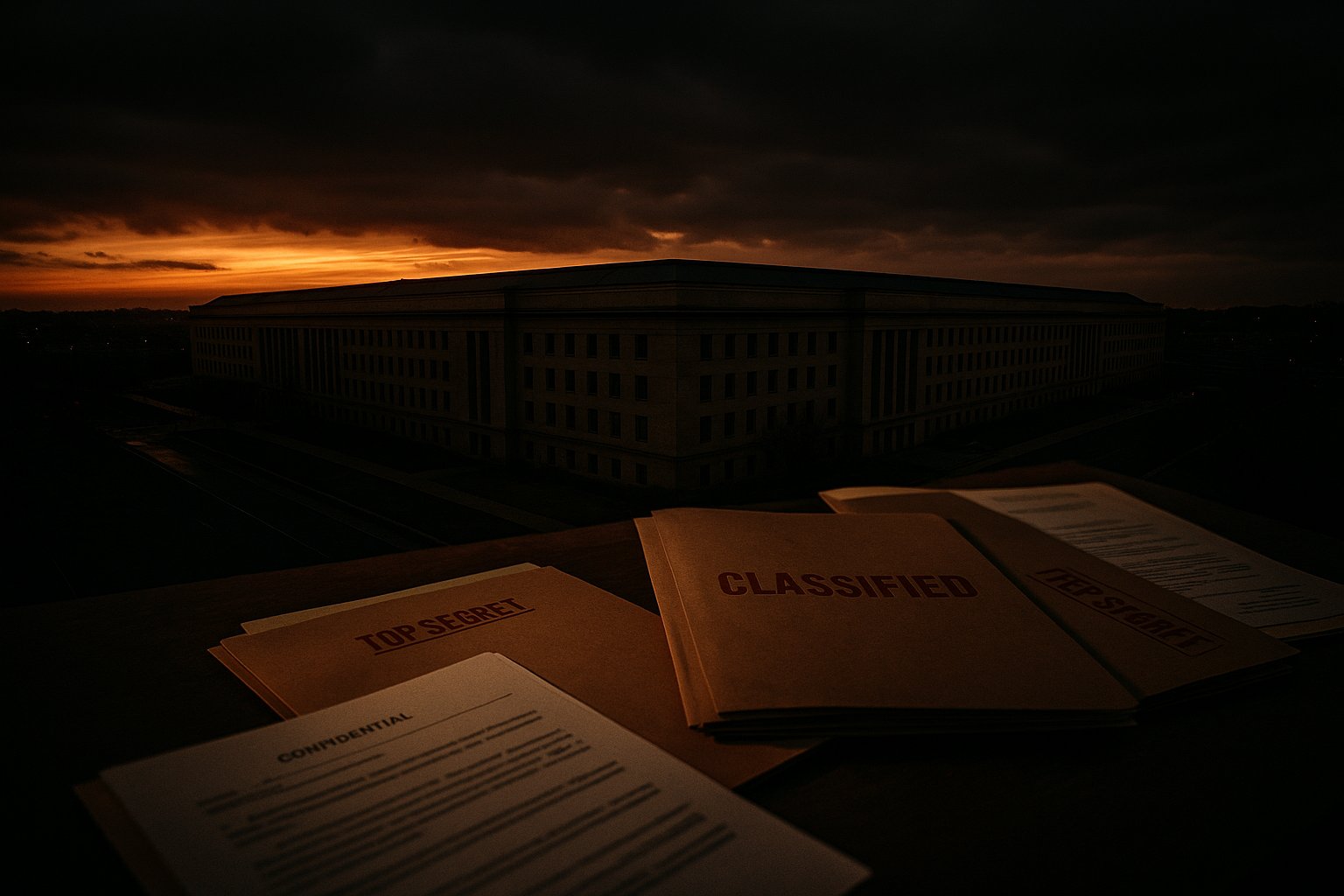
Two things happened to the Pentagon's UAP office this year that, read together, say more about it than either one does alone.
The first played out between March and May. Rep. Anna Paulina Luna, who chairs the House Oversight Committee's Task Force on the Declassification of Federal Secrets, sent Secretary of War Pete Hegseth a letter naming 46 specific UAP video files by title, date, and location — footage the All-domain Anomaly Resolution Office (AARO) already held — and set an April 14 deadline. The deadline passed with nothing delivered. Luna threatened a subpoena. Five weeks later, on May 22, the Department of War released "over 40" of the requested videos through its new PURSUE portal, and Luna, standing next to AARO's director, publicly declared him a good-faith partner.
The second happened on September 2. A Department of War contracting notice, first reported by DefenseScoop, showed AARO moving to buy sole-source access to the National Unidentified Flying Object Historic Records Center (NUFOHRC) — a private New Mexico nonprofit that a War Department official called "the world's largest private collection of historical UAP-related records." Among its holdings: the personal files of Dr. J. Allen Hynek, the astronomer the Air Force hired to explain UFOs away, who spent the second half of his career publicly saying it had gotten the subject wrong.
An office that had to be pushed for four months to release footage it possessed is now paying a civilian researcher for records it never kept. That is not a contradiction. It is the same fact, seen from two directions: the government's designated center of gravity for UAP transparency does not control the record — not the new material, which other classification authorities govern, and not the old material, which the government stopped collecting in 1969 and private citizens picked up.
- Sep 9, 2025
- Task Force hearing. Whistleblowers testify that AARO holds unreleased UAP video. Rep. Burlison plays footage of a Hellfire missile appearing to bounce off an orb near Yemen — the first time a member forces a clip into the public record
- Feb 19, 2026
- President Trump directs the Secretary of War to identify and release government UAP files
- Feb 25, 2026
- Pentagon spokesperson Sue Gough tells DefenseScoop AARO has examined over 2,000 cases, roughly 1,000 of which "lack sufficient data for analysis"
- Mar 31, 2026
- Luna's letter to Hegseth names 46 videos by title. Deadline: April 14
- Apr 14, 2026
- Deadline missed. Luna: she will work directly with Hegseth and is prepared to subpoena if "institutional resistance continues"
- May 8, 2026
- PURSUE launches at war.gov/ufo. Release 01: 158 files
- May 15, 2026
- Luna and Burlison review 40+ videos with AARO Director Jon Kosloski. Luna publicly endorses him as working "in good faith on declass efforts"
- May 22, 2026
- PURSUE Release 02: 64 files, including "over 40" of the lawmaker-requested videos — the Lake Huron shootdown, the Syrian "instant acceleration" clip
- Jul 21, 2026
- AARO's FY2025 annual report: 319 new cases, 114 resolved, one open maritime case off Virginia
- Sep 2, 2026
- DefenseScoop reports the sole-source contract notice for NUFOHRC's archive. NUFOHRC does not respond to a request for comment
The Files It Didn't Have
Start with the September story, because it is the stranger of the two. The sole-source designation is not a formality. Under federal procurement rules it is a formal finding that no other vendor can meet the requirement — and the War Department official's justification to DefenseScoop said exactly that: "Market research conducted to date indicates that no other organization possesses the historical depth, volume of unique records, and specialized analytical expertise to meet the government's minimum needs." The government, in writing, is acknowledging that a civilian researcher built something it cannot reproduce from its own holdings.
What NUFOHRC has is the pre-1990 record — the era the government specifically stopped documenting. Project Blue Book closed in December 1969. After that, for two decades, there was no systematic federal collection of UAP reports at all. The files from that gap exist because private researchers kept them, and NUFOHRC's founder, historian David Marler, spent decades accumulating them and, more recently, taking custody of legacy collections from the earliest civilian research groups. AARO's own congressional mandate under the FY2023 NDAA requires it to reconstruct the government's UAP history back to 1945. It cannot do that from inside government channels. So it is buying its way in.
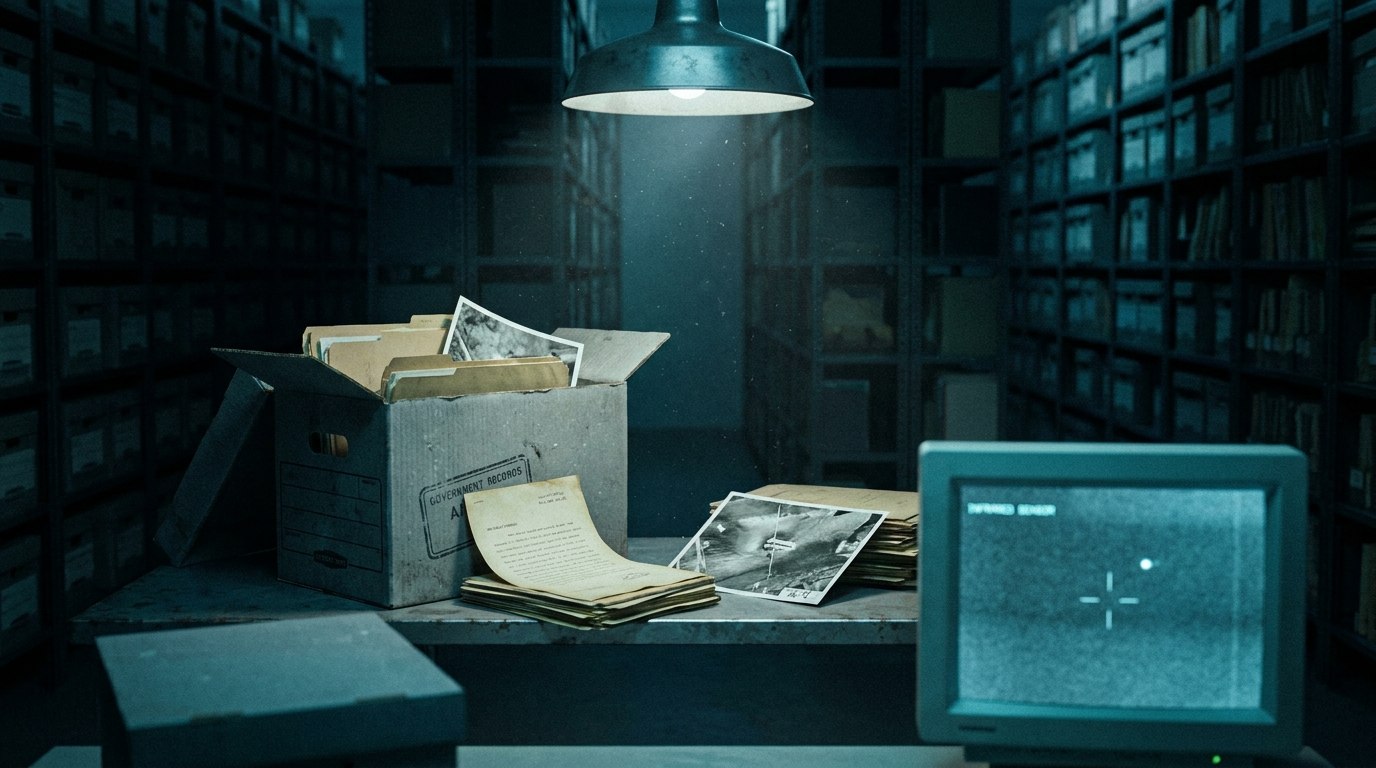
The Hynek detail is the one to sit with. J. Allen Hynek was the Air Force's own scientific consultant on Blue Book for nearly two decades, hired to find conventional explanations and, for years, good at it. In March 1966 he offered "swamp gas" as the explanation for a wave of Michigan sightings — a phrase that became a national punchline and that he later called the most embarrassing moment of his career. By 1968 he was publicly describing Blue Book as more concerned with public relations than investigation. After it closed, he founded the Center for UFO Studies in 1973 to do the work he said the Air Force wouldn't, and in 1977 published The Hynek UFO Report, subtitled as an account of the Blue Book cover-up. The Air Force's own expert became its most credentialed critic.
NUFOHRC holds his personal files. The Department of War is now proposing to pay for access to them. Nobody in the Pentagon is framing that as an institutional reversal, but it is one: the government discredited the scientist, the scientist's papers went to a private archive, and half a century later the government wants them back badly enough to skip competitive bidding. We covered the contract itself in detail last week (AARO Moves to Buy the Largest Private UFO Archive in North America); the point here is what it says about where the record actually lives.
The Files It Did Have
Now the March-to-May story, which looks different once you notice the archive purchase sitting next to it.
Luna's March 31 letter was, by any measure, the most specific UAP disclosure demand Congress has ever made. It did not ask whether videos existed. It listed 46 of them — by title, by date, by location, and in some cases by military callsign — including the February 2023 Lake Huron engagement, in which an F-16 fired AIM-9X Sidewinders at an unidentified object (the first missile missed and fell into the lake), and the 2021 Syrian file the Pentagon itself would later title "Syrian UAP instant acceleration." Several entries described objects moving between air and water. Those descriptions were not civilian speculation about what might exist. They were the military's own file names, which means Luna's task force had been told what was in the archive by people who had seen it.
Her accompanying House Oversight release put the grievance on the record in plain language: "The Task Force has found responses from AARO, when questioned about UAP sightings and provided data, less than adequate."
April 14 came and went. No videos. No public statement from AARO or the Pentagon explaining why. Luna's response, reported by NewsNation, was to say she would go directly to Hegseth and was prepared to subpoena if "institutional resistance continues." What did not appear anywhere in that five-week gap is worth noting: nobody in government said the videos did not exist. The easiest denial available was never made.
Then it moved. On May 15, Luna posted a photo of herself and Rep. Eric Burlison with AARO Director Jon Kosloski and wrote that they had completed a review of the videos together, calling him "very QUALIFIED" and someone who "has proven through action that he is working in good faith on declass efforts." A week later, PURSUE Release 02 went up: 64 files, 51 of them sensor videos, including — per NewsNation's count — "over 40" of the ones lawmakers had requested. The Lake Huron shootdown was in it. The Syrian acceleration clip was Item #2 on Luna's list and is now file DOW-UAP-PR051.
So the videos came out. That matters, and it is the reason this piece is not titled "The Office That Won't Share Its Files." But look at what it took: a whistleblower hearing to establish the footage existed, a presidential directive, a letter naming files the Pentagon had never acknowledged, a missed deadline, a subpoena threat, and a portal built by a task force outside AARO to publish them. The office that holds the government's UAP record could not, on its own authority, release 46 clips it had already logged and titled. Other classification authorities govern that material. AARO is its custodian, not its owner.
What the Members Say They Saw
Two Task Force members have described, through informal channels, material they say they've reviewed. In April, Rep. Tim Burchett told Fox News — in remarks picked up by Newsweek — that he had "been briefed on some things and yeah, they're pretty — they're pretty wild. And I think America needs to know that stuff." Burlison has gone further and more specifically, telling Newsweek and NewsNation's Ross Coulthart that he has watched footage of small silver orbs he describes as "balls of plasma" that hover with no visible propulsion and then accelerate instantly — behavior he says the intelligence community itself cannot explain.
Neither account has been independently corroborated, and both should be read as what they are: members of Congress describing classified briefings from memory, through television and social media. They are worth noting for a narrower reason. If Task Force members have seen this material, the congressional posture shifts from "we believe these files exist" to "we have seen them and want them released" — which is a very different oversight position. Burlison's September 2025 hearing, where he played the Yemen Hellfire clip that CBS, NBC, and most of the rest of the press ran the next morning, is the precedent: a member with access deciding the public should have it too.
The Numbers AARO Uses on Itself
Set the 46 videos against the office's own statistics and they look less like a sample and more like a selection. AARO's FY2024 annual report logged 757 new cases, at least 392 of them from FAA civil and commercial reporting rather than military channels. At the November 2024 media roundtable releasing that report, Director Kosloski said fewer than 3.5 percent of cases — 21 of the 757 — carried characteristics interesting enough to warrant deeper study. The FY2025 report, out in July, added 319 new cases and resolved 114 of them as balloons, birds, satellites, aircraft, drones, one rocket launch, and one manned jet pack; exactly one case was maritime, and it remains open (we covered that one). In February, Sue Gough put the cumulative figure above 2,000, with roughly 1,000 parked in an "Active Archive" for lack of usable data.
Read those together and the office is telling you something consistent: the overwhelming majority of what it receives is mundane or unresolvable, and the sliver that isn't is small and specific. The 46 videos were not drawn from that pile at random. Someone with access chose them, gave the titles to a congressional task force, and the task force asked for those and no others. Whether the footage substantiates what the military's own file names suggest — instant acceleration, transmedium movement, a missile that didn't work — or explains those descriptions away is the question the videos themselves would answer. For most of the 46, that is now possible. For the rest, nobody outside a classified setting knows, and nobody has said how many "the rest" is.
What This Doesn't Prove
- "Over 40" is not 46. No official crosswalk between Luna's list and the released files has been published, and none of the outlets covering Release 02 produced one. The gap could be zero, or it could be the most interesting six files on the list. We flagged this in May; it is still true in September.
- Releasing footage is not identifying an object. The Lake Huron clip is public; the Pentagon has never retroactively assigned it a final identification, and contemporaneous reporting pointed toward a hobbyist balloon. The Syrian clip's "instant acceleration" is under one second of sensor-tracking loss, replayed and enhanced by the Pentagon itself. Documentation without explanation is the pattern across most of PURSUE.
- Sole-source justifications are written by the buyer. The quotes describing NUFOHRC's uniqueness come from the government side explaining why only NUFOHRC will do. That is standard procurement language, not an independent assessment. And NUFOHRC itself has said nothing publicly.
- Members describing briefings is not evidence. Burchett's "pretty wild" and Burlison's "balls of plasma" are recollections of classified material, offered on cable news. They tell you what those members believe they saw. They do not tell you what the sensors recorded.
The Question Nobody Has Asked Marler
There is a loose thread in the archive story that has consequences well past this one procurement. The contracting notice describes a subscription to "proprietary data, metadata, and analytical products" — one base year, four option years. What it does not describe, and what has not been reported anywhere, is whether NUFOHRC has placed any conditions on how the government may use the material once it has it. Specifically: can the government classify what it acquires?
That is not a hypothetical. The FY2024 NDAA created a UAP Records Collection at the National Archives with a presumption of disclosure, but it also preserved the executive branch's authority to withhold records on national security grounds. If AARO subscribes to an archive that civilian researchers assembled precisely because the government wouldn't, and no term of the subscription prevents the government from treating what it learns as classified, then the effect of the purchase could be to move material out of public reach rather than into it. NUFOHRC did not respond to DefenseScoop's request for comment, and no negotiation between the parties has been confirmed — the notice establishes the government's intent, nothing more. But how Marler handles this, if and when it becomes a negotiation, will be among the more consequential decisions a private UAP researcher has faced. So far he hasn't said a word.
What to Watch Next
- A crosswalk. Whether Luna's task force, AARO, or anyone else publishes a file-by-file reconciliation of the 46 requested videos against what PURSUE has released — and what the unreleased remainder is.
- The award. Whether the NUFOHRC sole-source contract actually clears (sole-source findings can be protested), its value, and whether any usage or classification terms are disclosed.
- Marler. Whether NUFOHRC comments at all, and whether that comment addresses conditions on the archive.
- PURSUE Release 06. As of this writing the Department of War is 34 days past Release 05 — already the longest gap since the portal launched. Whether the next tranche includes any pre-1990 material would be the first sign the archive purchase produced something reviewable.
The disclosure fight of 2026 is usually told as a story about what the objects are. This year's record suggests a more answerable question underneath it: who actually holds the files, and on what terms. The office Congress built to answer the first question turns out, on the evidence of its own year, not to be in charge of the second.
Related Briefings
- Edition 022: Four Witnesses, 375 Files, No Match — the hearing that started the 46-video fight, one year on (Oct 1, 2026)
- Breaking: AARO Moves to Buy the Largest Private UFO Archive in North America (Sept 5, 2026)
- Deep Dive: The Only Maritime Case in AARO's Entire FY2025 Report (Sept 6, 2026)
- Breaking: Pentagon Drops 64 More UAP Files — Including the Syrian "Instant Acceleration" Footage (May 22, 2026)
- Edition 020: Witnesses Without Documents (July 5, 2026)
Every edition goes this deep — primary documents, skeptical arguments, and the gaps the official record leaves open. Free, in your inbox every week.
Subscribe Free →