Four Witnesses, 450 Files, No Match
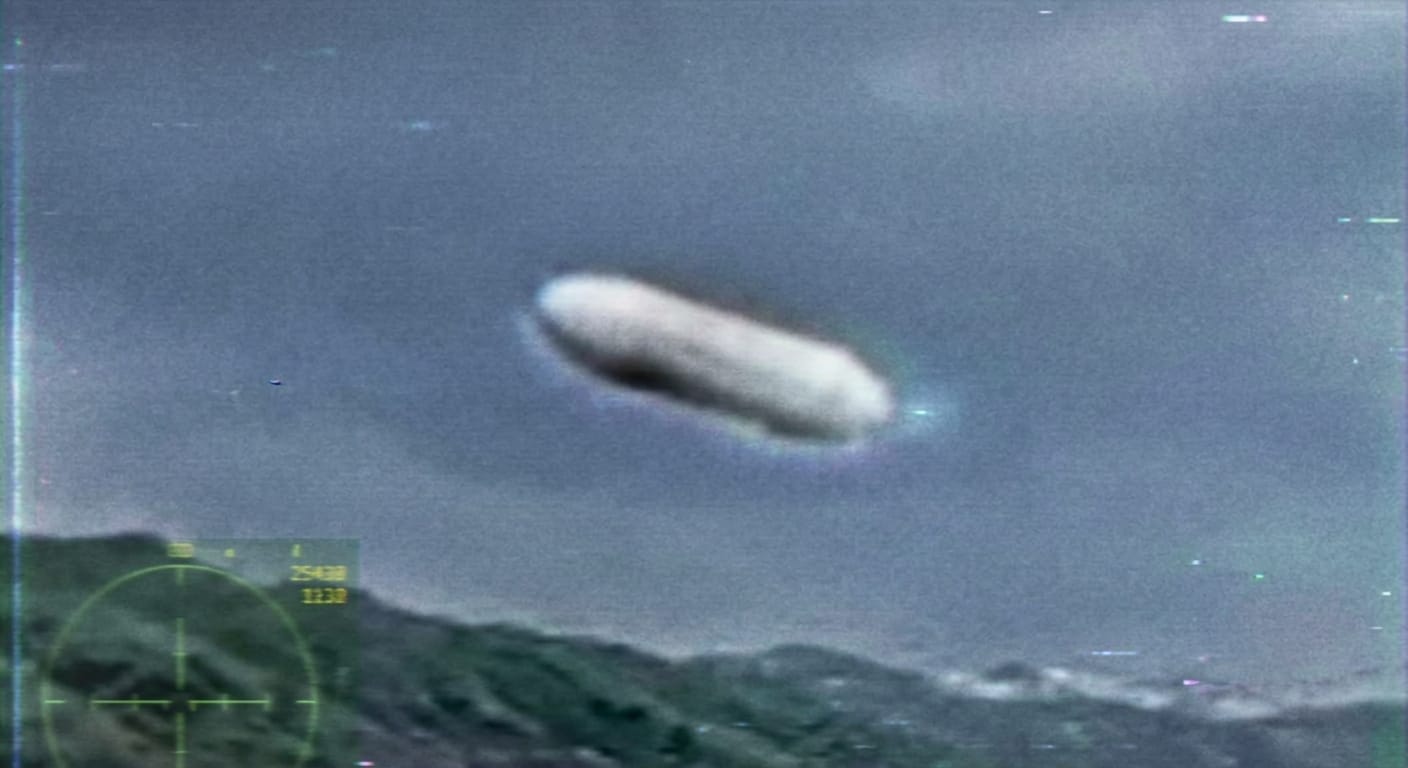
On September 9, 2025, four days after an executive order gave the Department of Defense the secondary title it now uses, the Department of War, a House Oversight task force convened a hearing called "Restoring Public Trust Through UAP Transparency and Whistleblower Protection." Five people testified: an active-duty Navy senior chief with 23 years of service, the first sailor still in uniform to describe a UAP encounter to Congress in public; two Air Force veterans; the journalist who had spent more than thirty years on the subject; and a policy lawyer there to talk about whistleblower law.
That hearing is where this year's disclosure fight began. Rep. Anna Paulina Luna's April 1 release, announcing the letter in which she named 46 specific videos, cited it directly: the task force had been told there that the Pentagon's All-domain Anomaly Resolution Office (AARO) held footage it had not released. Three and a half weeks after her deadline passed, the Department of War began publishing UAP files through PURSUE. Six tranches later, the public has 450 of them.
We took the Department of War's own file manifest, the CSV it publishes at war.gov/ufo, and searched it for the cases the witnesses brought to that hearing: the USS Jackson, Langley Air Force Base, the Hellfire missile off Yemen, and the Vandenberg incursions during reconnaissance launches. One year on, none of them is in the record the government has released.
- SCPO Alexandro Wiggins
- Active-duty Navy Operations Specialist, 23 years. Firsthand: four "Tic Tac" objects off Southern California, Feb 15, 2023, aboard USS Jackson (LCS-6), recorded on the ship's EO/IR camera. Video exists and is public, via journalists. Written statement cleared by the Pentagon's prepublication office Sept 4, 2025
- Jeffrey Nuccetelli
- Air Force veteran, 16 years military police. Reported: five incursions at Vandenberg, 2003–2005, during National Reconnaissance Office launches; the first, Oct 14, 2003, a glowing red square over two missile-defense sites, reported by Boeing contractors. No records or second witness produced
- Dylan Borland
- Air Force veteran, geospatial-intelligence analyst. Firsthand: a roughly 100-foot silent equilateral triangle lifting off near the NASA hangar at Langley AFB, 2012; more than a decade of career reprisal since. Single source; no documentation of the reprisals has surfaced
- George Knapp
- Investigative journalist, KLAS-TV. Claimed that UAP material has been "moved out of government" to private contractors who "set their own standards about who is allowed to know," specifically "to keep it from FOIA." No documents offered at the hearing
- Joe Spielberger
- Senior policy counsel, Project On Government Oversight. Testified on whistleblower-protection law, not on any incident
The Sailor
Senior Chief Petty Officer Alexandro Wiggins is the reason the hearing mattered institutionally, and his written statement is the most carefully bounded document in the record. Its first page carries a Department of Defense Office of Prepublication and Security Review stamp: cleared for open publication, September 4, 2025. The government read what he intended to say and let him say it. He testified in a personal capacity and said so more than once.
The account itself reads like a watchstander's log. February 15, 2023, about 7:15 p.m. Pacific, in the W-291 warning area off the Southern California coast, the same general stretch of ocean where the Nimitz "Tic Tac" encounter happened in 2004. Wiggins was moving between the Combat Information Center and the bridge wing. A self-luminous object rose from the waterline, which he watched with his eyes and the CIC crew watched on the ship's Star SAFIRE multi-spectral camera. It joined three similar objects. The four held formation, then, in his words, "departed at the same moment, with an acceleration profile that, subjectively, appeared near-instantaneous." There was no sonic boom, and the radar picture stopped showing them. CIC operators had estimated roughly 22,000 feet of altitude in the recorded crew dialog.
Two things about the evidence trail are easy to miss. First, the footage did not reach the public through the Navy or AARO. Wiggins's own references list the source as the April 2025 episodes of the Weaponized podcast, where journalists Jeremy Corbell and George Knapp published the clip and the crew-dialog excerpts. Second, what is public is handheld video of the CIC display. The radar tracks, the full SAFIRE recording, and whatever report went to the ship's Tactical Action Officer that night remain wherever the Navy keeps them. Wiggins says the encounter was reported through the proper channel. He does not say what happened to the report after that, and nothing in six PURSUE releases tells us.
The Airmen
Jeffrey Nuccetelli's account covers a different kind of evidence problem. He served 16 years as an Air Force military police officer and described five separate incidents at Vandenberg between 2003 and 2005, the first on October 14, 2003, when Boeing contractors reported a large, glowing red square hovering silently over two missile-defense sites. He said the objects looked "like flying buildings," that multiple personnel saw them, and that the incidents were documented and reported up the chain. Rep. Scott Perry (R-Pa.) drew out the point that gives the account its weight: these were reports of anomalies over what he called "multi-million or maybe billion-dollar operations," during National Reconnaissance Office launches, and Nuccetelli said he did not believe he was ever interviewed about what he saw.
That is a claim about a paper trail. Reports up a chain of command generate records. None have been produced, by Nuccetelli or by the Air Force, and no second witness from Vandenberg has come forward on the record. The absence of a formal response to repeated reports over sensitive launches is worth examining. It also admits of explanations, including ordinary bureaucratic indifference, that do not require anyone to have suppressed anything. The PURSUE manifest contains exactly one Vandenberg document: a launch summary from 2000, three years before the incidents he described.
Dylan Borland's testimony is the hearing's most serious and its least corroborated. A former geospatial-intelligence analyst, he described watching a roughly 100-foot equilateral triangle lift off near the NASA hangar at Langley Air Force Base in 2012, silent, its surface appearing "fluid or dynamic." He then described the decade that followed: clearances blocked and delayed, then his ability to work in the field removed altogether, a pattern he attributes to reporting the encounter. In interviews since, he has said he took his case to the Intelligence Community Inspector General and remains blacklisted from certain agencies.
Every part of that is his own account. No employment record, agency correspondence, or IG finding has surfaced in available reporting, and his interest in vindication is obvious and legitimate. Neither fact makes him wrong. Both mean the claim is waiting on documentation that does not yet exist in public, and a search of the manifest for "Langley" or "2012" returns nothing.
The Reporter
George Knapp did not bring an encounter. He brought a theory of where the evidence went, and he said it plainly enough that the committee's own wrap-up quoted it: "A lot of this stuff has been moved out of government" and "given to private contractors," who have "set their own standards about who is allowed to know," and did so, when a member asked directly, "to keep it from FOIA." He pointed to the Bigelow Aerospace Advanced Space Studies contract of the late 2000s, and to what he described as its interest in obtaining unusual materials, as an example of the arrangement.
The general shape of the claim is not exotic. Contractor arrangements that keep sensitive work outside the Freedom of Information Act are documented federal practice, and the AAWSAP contract that ran through Bigelow's company is a matter of public record (we covered the contract and its paper trail in Edition 007). What Knapp did not do at the hearing is produce a document showing UAP material specifically moving under such an arrangement. Until one appears, it is a well-informed reporter's characterization, offered under oath about a subject he has covered for decades, and not more than that.
What the Hearing Set in Motion
The hearing also produced the year's most replayed piece of footage, and it did not come from a witness. Rep. Eric Burlison played a clip he said showed an MQ-9 drone firing a Hellfire missile at a fast-moving orb off Yemen in October 2024. "It kept going," he told the room, "and it looked like the debris was taken with it." CBS, NBC, and much of the rest of the press ran it the next morning.
From there the chain is short and documented. The task force learned at the hearing that AARO held more. On March 31, Luna wrote to Secretary of War Pete Hegseth naming 46 videos by title. On April 1 her office put the grievance on the record: "The Task Force has found responses from AARO, when questioned about UAP sightings and provided data, less than adequate." The April 14 deadline passed. On May 22, PURSUE Release 02 delivered "over 40" of the requested files, including the Lake Huron shootdown and the Syrian "instant acceleration" clip. We told that story in full last week (Edition 021).
Read against the hearing, the release has an odd shape. What Congress got was what Congress asked for by name: the files a task force had been told about, in a list it could write down. What Congress did not get was any of the material its own witnesses had described from the stand a year ago.
What We Checked, and How
The Department of War publishes a machine-readable manifest of every PURSUE file at war.gov/ufo: release number, title, agency, incident date, location, and a description. We keep a copy for our Intelligence Hub's file archive and searched the current one: 450 entries through Release 06 on September 18. (We ran the search first in mid-September against the 375 files then public, and again after Release 06; the results did not change.) The results, for anyone who wants to repeat them:
- "Lake Huron"
- 1 file. DOW-UAP-PR071, Release 02: the F-16C shootdown. On Luna's list; delivered
- "Syria"
- 11 files, including DOW-UAP-PR051, "Syrian UAP instant acceleration," Release 02. On Luna's list; delivered
- "Jackson", "LCS", "Littoral"
- 0 files. Nothing names the ship or its class
- "Langley", "2012"
- 0 files name Langley. Seven Release 06 AAWSAP contract documents mention 2012 only as the end of that program; none describes a 2012 incident
- "Yemen", "Hellfire", "MQ-9"
- 0 files. The clip Burlison played is not in the official record
- "Vandenberg"
- 1 file, DOW-UAP-D049, Release 01: a launch summary dated 2000. Not the 2003–2005 incidents
- "Tic Tac"
- 2 files, both Coast Guard C-144 infrared clips from Tyndall, April 2024. Not the Jackson objects
What This Doesn't Prove
- Absence from the manifest is not absence from the government. PURSUE publishes what has been found, reviewed, and declassified on a rolling basis. A file about the USS Jackson could exist under a classification that has not cleared, or under a title that names a command rather than a ship. Release 01 includes files titled only by command and year, such as "Unresolved UAP Report, INDOPACOM, 2023." That one lists Japan as its location, so it is not the Jackson; the point is that titles like it cannot rule a case in or out, and nobody outside the review can say what they contain.
- A cleared statement is not an authenticated video. The prepublication stamp means the Pentagon reviewed Wiggins's words for classified content. It did not certify the footage, which the government has never released or commented on in its own name.
- Three of the four accounts remain single-source. Nuccetelli's reports, Borland's reprisals, and Knapp's contractor claim are each one person's testimony without a document behind it in public. That is the same evidentiary position they were in a year ago.
- AARO has never stated a position on any of these cases. Not on the Jackson encounter, not on Langley, not on the Yemen orb. The committee's "less than adequate" finding is a political conclusion; the office's silence is a fact, and the two are not the same kind of thing.
What to Watch Next
- Release 07. Release 06 arrived on September 18 with 72 files (the manifest has since grown to 75 entries for that date), mostly AAWSAP contract studies and historical Blue Book material, and nothing from the hearing. Whether a later tranche contains a 2023 Navy file from Southern California waters is the most direct test of whether the hearing's evidence ever enters the official record.
- The Jackson sensor data. Any release of the ship's radar or full SAFIRE recording, through PURSUE, FOIA, or a congressional request, would move the case from a witness account with a clip to a documented multi-sensor event.
- Borland's complaint. An Intelligence Community Inspector General outcome, in either direction, would be the first document in a story that has none.
- The whistleblower bill. The hearing was convened in part to build support for stronger UAP whistleblower protections. Wiggins's stated reason for testifying was to reduce the career risk for the next sailor. Whether the law changed is the measure he set.
A year ago, five people told a House task force what they had seen or what they had learned. Since then the Department of War has published 450 UAP files in six tranches, under a program it describes as unprecedented, and the hearing's cases are in none of them. Release 07, whenever it arrives, is the next place to look.
Related Briefings
- Breaking: Warp Drives, a 1952 Film, and a Police Department — Inside the Pentagon's Sixth UAP Release (Sept 27, 2026)
- Edition 021: The Office That Couldn't Share Its Own Files Is Buying Someone Else's (Sept 10, 2026)
- Breaking: Freed to Talk, Not Free to Publish — Inside Trump's UAP NDA Waiver (Aug 1, 2026)
- Breaking: Pentagon Drops 64 More UAP Files — Including the Syrian "Instant Acceleration" Footage (May 22, 2026)
- Edition 007: The UFO Industrial Complex — Who Profits from the Mystery? (BAASS, AAWSAP, and the DIA contract record)
Every edition goes this deep — primary documents, skeptical arguments, and the gaps the official record leaves open. Free, in your inbox every week.
Subscribe Free →